The Markup: NC considers ID restrictions; CT advances mail voting expansion
Welcome to the Markup, Voting Rights Lab’s weekly digest of election law and policy updates.
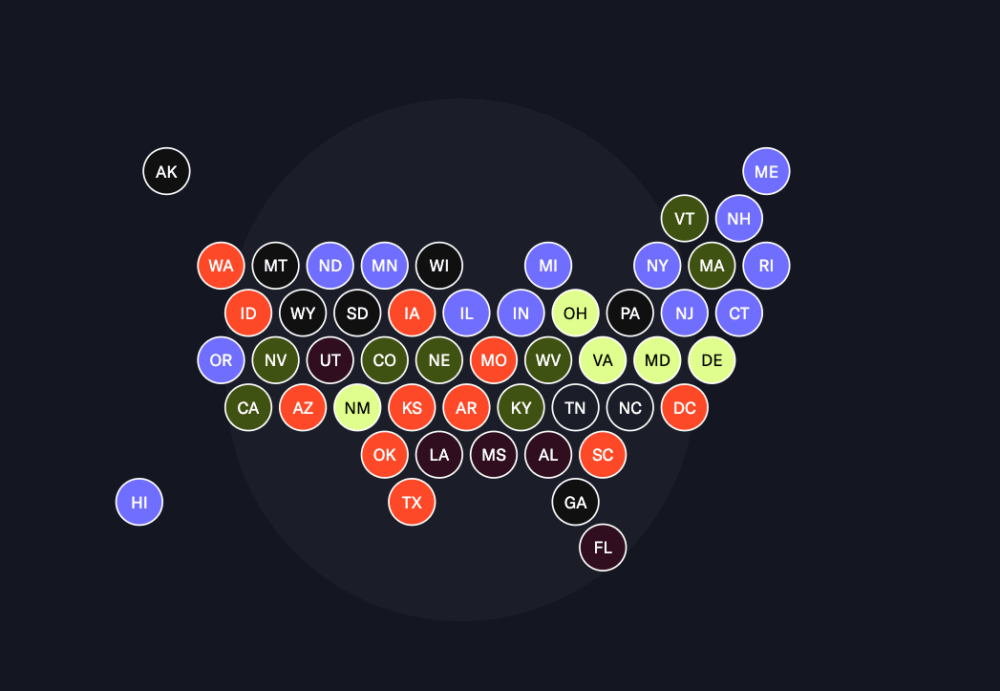
We are tracking 1,603 bills prefiled or introduced this session across 44 states and D.C. Our analysis finds that 731 bills would improve voter access or election administration and 333 would restrict them. This week’s Markup features policy updates in Arizona, Connecticut, Florida, Indiana, Michigan, North Carolina, Tennessee, and Virginia.
Jump to section:
Improving Voter Access or Election Administration
Connecticut House passes bill expanding access to mail voting and protecting against federal election interference.
The bill would eliminate the excuse requirement for mail voting, allow voters to request a mail ballot application before each election, and establish a cure process for ballots with errors. Connecticut is one of only 14 states where not all voters can vote by mail. In addition, the bill would authorize the attorney general to seek relief at the state Supreme Court if there is a threat of federal interference. Lastly, it would require local election officials and election workers to provide any subpoenas they receive to the attorney general and secretary of the state within 36 hours. The bill now goes to the Senate for consideration.
Virginia strengthens the cure process for mail ballots; agrees to stop voter purges within 90 days of an election.
Several bills became law. These include measures to strengthen cure procedures and clarify rules for removing local election officials from office. Additionally, the state entered into a settlement agreement, whereby Virginia agreed not to use flawed data to remove purported noncitizens from the voter rolls within 90 days of an election. A fall 2024 purge effort disproportionately impacted naturalized citizens due to outdated information.
Restricting Voter Access or Election Administration
North Carolina elections board considers new voter ID rules that could result in more rejected ballots.
North Carolina law allows voters to request an exemption from the state’s photo ID requirements, if they have a qualifying excuse. Rejecting those requests currently requires a unanimous vote from a county board of elections. Under the new proposed rules, a simple majority of the board could reject those requests. North Carolina’s county boards of elections have been the subject of a partisan takeover in recent years.
Tennessee to use DHS SAVE system to check new voter registrations.
Gov. Bill Lee signed legislation (H.B. 2185) that authorizes the state to access the federal Department of Homeland Security’s Systematic Alien Verification for Entitlements (SAVE) system to verify an applicant’s U.S. citizenship at the time of voter registration. The SAVE database has proven unreliable, erroneously flagging citizens for potential removal from voter rolls in multiple states.
Indiana law barring use of student IDs for voting reinstated.
A federal appeals court stayed a district court ruling blocking the Indiana law. Student voting has been under attack around the country in recent years.
On Our Radar
Michigan court upholds state law establishing voting access for citizens living abroad.
Like many states, Michigan allows U.S. citizens who have never lived in the country but whose parents’ or spouse’s last U.S. residence was in Michigan to vote in state elections. Those impacted are often family members of Americans serving in the military and stationed abroad. Last week, a judge dismissed a challenge to this policy from the Republican National Committee. This is part of an increasing threat to the voting rights of citizens living abroad and serving in the military.
Arizona appeals court dismisses lawsuit contesting counties’ drop box and signature verification practices.
In 2024, conservative groups America First Legal Foundation and the Strong Communities Foundation of Arizona brought a lawsuit against Maricopa, Coconino, and Yavapai Counties. The groups argued that these counties’ drop box, voter registration, and signature verification processes were illegal. The appeals court ruling affirmed a county judge’s decision to dismiss the case.
U.S. Senate rejects attempt to attach SAVE America Act to funding package.
A priority of President Donald Trump, this legislation would require voters to provide proof of citizenship to register to vote. In addition, the bill would impose ID requirements on in-person and mail voters. Such requirements that are stricter than any state’s current laws. This latest effort failed in a 48-50 vote. The debate on the SAVE America Act has stalled in the Senate.
Virginia voters approve redistricting as Florida prepares for special session.
Virginia voters adopted a constitutional amendment, which allows the legislature to redraw the state’s U.S. congressional districts during a special election. The state Supreme Court heard arguments this morning challenging the legislative process that led to the amendment. Meanwhile, Florida lawmakers are set to convene a special legislative session tomorrow (April 28) to address the state’s congressional maps. Gov. Ron DeSantis introduced a new map this morning for lawmakers’ consideration. For more on mid-decade redistricting, check out our ongoing coverage.
Election Policy Tracker
Explore our Election Policy Tracker for real-time updates and analysis.
Subscribe to The Markup
Sign up here to get these updates delivered straight to your inbox.