Lessons From the 2026 Midterms: An Opportunity to Build Best-in-Class Voting Systems
With the 2026 election now behind us, we are all asking the same question: what comes next? President Trump’s efforts to overhaul our elections from the top failed; the election went smoothly, and election deniers (mostly) stayed quiet.
Credit for this year’s success belongs first to the people who planned for it. Local election officials and organizers who spent months planning for every scenario. State lawmakers who passed commonsense reforms in recent years gave them the tools to succeed. Wide margins in many key races also helped, relieving pressure on underlying flaws that a closer election could have exposed.
But it would be a mistake to simply move on. Election deniers still hold power at the local, state, and federal levels. The gaps in state law they could use to manipulate our elections still exist. Now is the time to double down, not stand down.
As new and returning lawmakers prepare for the 2027 legislative sessions, they have a once-in-a-generation opportunity to fix those flaws and put election denialism to bed — for good.
Where States Delivered
Early in-person voting
This year, more than 34 million voters cast ballots during early in-person voting. According to Voting Rights Lab’s Tracker, all but three states require or authorize jurisdictions to offer early in-person voting before Election Day. States have steadily invested in this option, giving voters more flexibility and spreading out the workload for election officials.
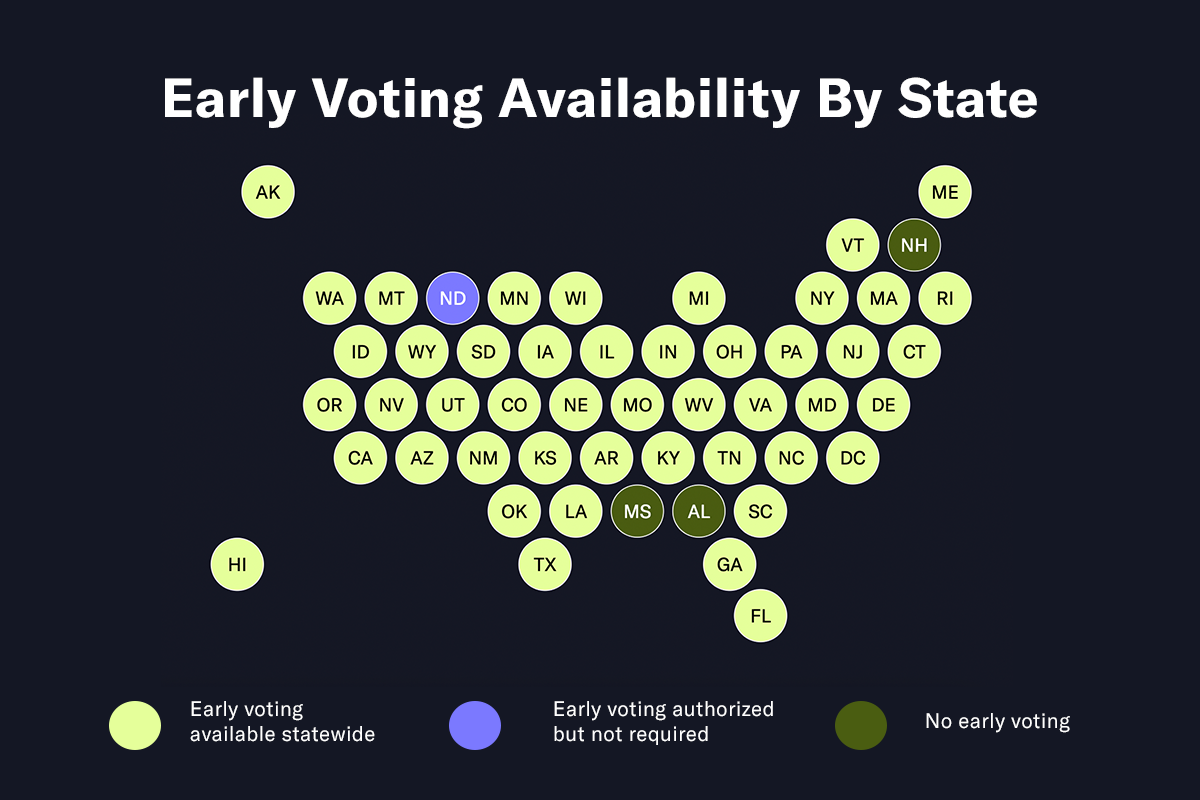
Since the 2022 midterms, several battleground states have made early voting easier. In 2023, Michigan implemented a constitutional change allowing voters to insert their ballots directly into tabulators. This replaced a slower system that required every early in-person voter to fill out a mail ballot. That same year, Texas set uniform early voting hours, giving voters across the state the same opportunity to vote early.
Emergency response planning
Every election has its share of unexpected events, from natural disasters to bomb threats and technical snafus. This year was no different, but election officials across the country were prepared. Flexible state emergency policies also helped them adapt. For example, when catastrophic flooding disrupted election operations in San Juan County, Utah, an emergency declaration allowed affected voters to return their ballots electronically. Usually, this option is limited to military voters, overseas voters, and voters with disabilities. In Florida and elsewhere, election officials relocated polling locations after storms and flash flooding made some roads impassable.
Certification as a legal duty
The 2026 midterms were largely free of the contested races, certification refusals, and claims of fraud that have followed recent elections. Wide margins in some of the most contested races, in particular, left losing candidates little doubt about their fate. It also left them with little incentive to pursue recounts or costly court challenges.
But policy mattered, too. Certification refusals did not materialize, partly because lawmakers and the courts made clear that certifying results is a legal duty, not a political choice. In 2024, Michigan made certification a “ministerial, clerical, and nondiscretionary duty” for state and county canvassing boards. In Georgia, the state Supreme Court struck down state election board rules that would have given local board members broad access to election materials before certifying results.
Voters rejected unnecessary new ID requirements for mail ballots
Voters in Arizona, California, and Colorado rejected ballot measures that would have required mail voters to provide an identification number with their completed ballots. All three states already verify mail voters’ identities by matching the signature on each return envelope to the voter’s signature on file. The Arizona and California measures would also have imposed stricter ID requirements for in-person voting.
- Bipartisan teams handle the ballots. Most states require workers from different political parties to staff counting sites, and party representatives can generally observe. In Arizona, two election workers from different parties transport ballots to the central counting location, where bipartisan workers appointed by election officials handle them.
- The numbers have to add up. Before results leave the polling place, officials reconcile the number of ballots counted against the number of voters who checked in. In New Hampshire, election inspectors must complete an “inspector’s statement” after the tally, noting any discrepancy between the number of ballots and the number of voters.
- The machines get tested. Many states test their equipment before and after an election to make sure it works properly. Texas law requires officials to test counting equipment three times: no later than 48 days before Election Day, immediately before counting begins, and immediately after counting ends.
Where States Fell Short
Relying on questionable data for list maintenance
Accurate voter rolls are the foundation of a smooth election. States have reliable tools to keep their lists current without removing eligible voters, including state vital records data, the U.S. Postal Service’s National Change of Address program, and membership in the Electronic Registration Information Center (ERIC). When states stray from these proven sources, however, eligible voters get flagged or even removed.
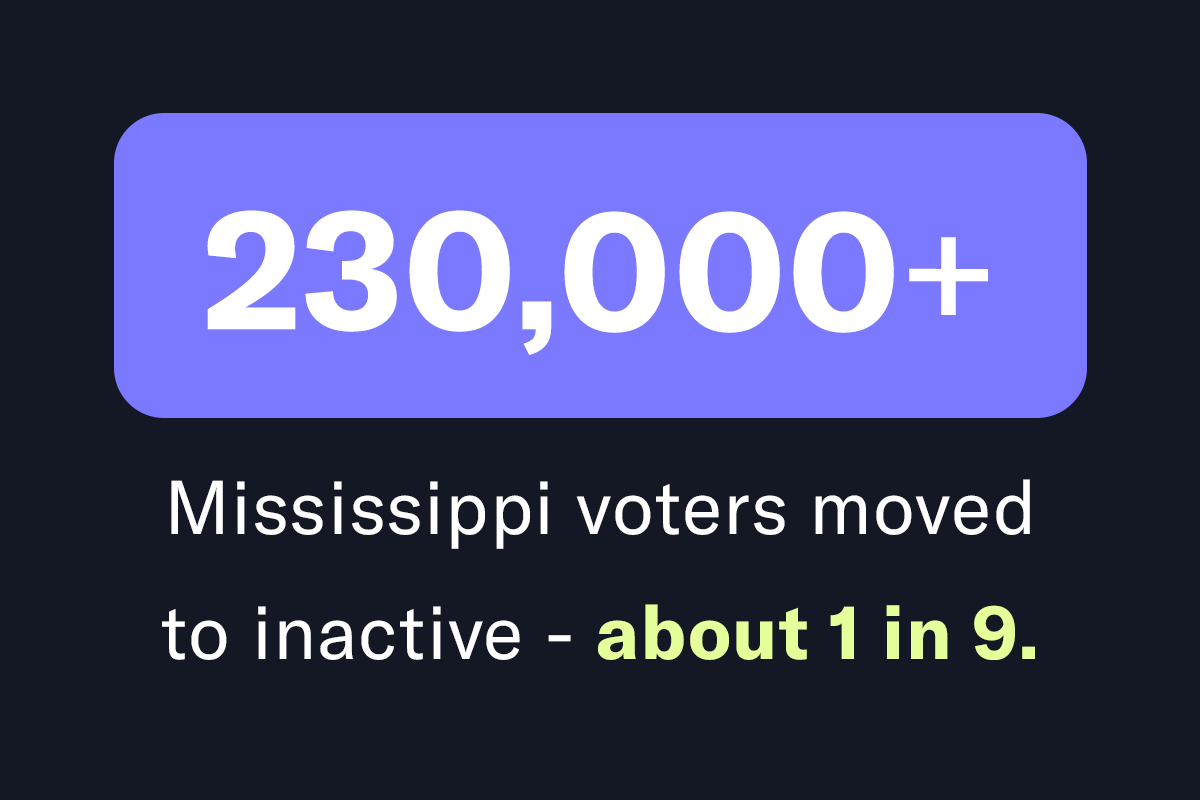
In Mississippi, the secretary of state’s office directed election officials to use Experian credit data to check voters’ addresses. More than 230,000 registered voters — about one in nine — were moved to inactive status based on faulty data. Far more voters than usual were forced to cast affidavit (or provisional) ballots, which election officials then had to verify one by one. The slower count kept the state’s unexpectedly competitive U.S. Senate race too close to call for more than a week after Election Day.
Elsewhere, the Systematic Alien Verification for Entitlements (SAVE) database has incorrectly flagged thousands of eligible voters as potential noncitizens. This flawed system creates headaches for those voters and the election officials tasked with investigating them.
Technology overdue for modernization and investment
Elections are designated as critical infrastructure. Yet many states have struggled to modernize their election systems and share data effectively between state agencies and election officials. Since summer 2025, Texas’s election management system (known as TEAM) has been plagued by performance issues. These problems have forced election officials to use inefficient workarounds. Data-sharing glitches also created backlogs of thousands of voter registrations, making it even harder to process registrations before Election Day.
States also faced technical issues. Both Colorado’s and Washington’s state election websites went down under heavy traffic on Election Day. While neither outage affected voters’ ballots or the election results, both point to the need for continued investment in election technology and cybersecurity at the state and federal levels.
Slow results
Election results are not official until they are certified, often weeks after election night. But voters are accustomed to seeing races “called” by the media on election night or soon after. When counting takes longer than expected and drags on for days, as it did this year in Alaska, California, and Mississippi, misinformation can fill the gap. Close races take longer to call, but policy decisions, such as limits on processing mail ballots before Election Day, extended ballot receipt deadlines, and too little funding for election staff, all contribute to delays.
The Path Forward: 2027 and 2028
Americans across the political spectrum want voting to be simple, secure, fast, and transparent, and free of partisan manipulation. But confidence is fragile. In July, only 55% were confident the midterms would be conducted fairly and accurately, down from 64% before the 2022 midterms.
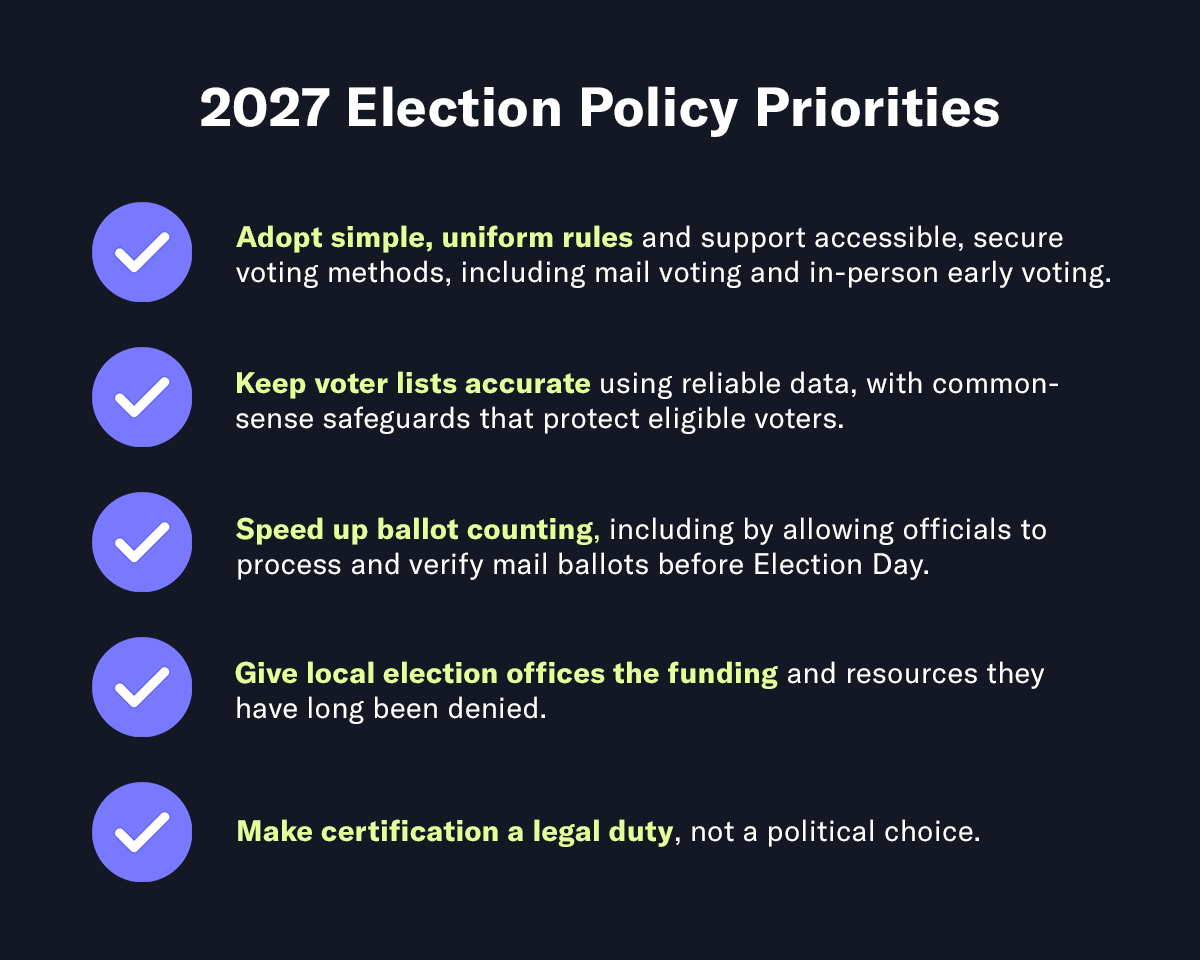
Now is the time to invest in our state election systems and shore up laws to prevent election manipulation. That means speeding up ballot counting, keeping voter lists accurate with reliable data and commonsense safeguards, verifying election results before they are final, and making sure election certification is a legal duty, not a political choice.
If lawmakers act in 2027, voters can head into 2028 with elections that are simple, secure, fast, and transparent — and results they can trust.
Learn more
View more in-depth reports, blogs, and other policy analysis from Voting Rights Lab.