The Markup: States respond as Supreme Court deals blow to VRA
Welcome to the Markup, Voting Rights Lab’s weekly digest of election law and policy updates.
We are tracking 1,608 bills prefiled or introduced this session across 44 states and D.C. Our analysis finds that 732 bills would improve voter access or election administration, while 334 would restrict them. This week’s Markup features policy updates in Alaska, Arizona, Florida, Louisiana, Maryland, Vermont, and Wisconsin.
Jump to section:
Improving Voter Access or Election Administration
Maryland enacts state Voting Rights Act.
Gov. Wes Moore signed S.B. 255 into law. This law will allow Marylanders to pursue litigation related to vote dilution or discrimination in local elections and authorize courts to impose remedies for violations. The law aims to strengthen protections for voters at the local level and comes as states increasingly adopt their own voting rights frameworks. The future of both federal and state voting rights acts is murky in the wake of last week’s Supreme Court decision in Louisiana v. Callais.
Vermont House passes Voter Protections Act.
The Vermont House passed an amended version of S.B. 298 and sent it back to the Senate for a concurrence vote. Initially entitled the “Vermont Voting Rights Act,” the bill includes protections against practices or procedures that result in vote dilution or denial for protected classes. The House amendments remove penalties for communicating false information to voters and add safeguards for public access to municipal voter lists. The Senate will consider concurring with the House’s changes tomorrow.
Restricting Voter Access or Election Administration
Supreme Court deals blow to the Voting Rights Act.
In Louisiana v. Callais, the U.S. Supreme Court struck down Louisiana’s congressional map. The Supreme Court held that the state unconstitutionally took race into account in drawing the districts. The ruling’s re-interpretation of the Voting Rights Act makes it near-impossible for plaintiffs to successfully argue that a proposed district map illegally dilutes minority voting power. This decision opens the door for several states to draw new maps and eliminate districts drawn to enable minority communities to elect candidates of their choice.
Arizona judge blocks protections for voters who show up at the wrong polling place.
A Maricopa County Superior Court judge found that Secretary of State Adrian Fontes infringed upon counties’ authority when he directed local election officials to accommodate voters who showed up at the incorrect precinct. The policy, part of the state’s Election Procedures Manual, allowed these voters to use machines intended for voters with disabilities.
On Our Radar
Alaska governor vetoes bipartisan election reform package.
Gov. Mike Dunleavy cited “legal and operational concerns” in his veto of S.B. 64. The bill would have created a cure process for mail ballots, expanded forms of acceptable voter ID, and strengthened voter list maintenance processes. Lawmakers have said they will consider a veto override session later this week. The bill originally passed by a margin just shy of the two-thirds majority required for a veto override.
Florida enacts new congressional map; Louisiana delays primary; Alabama and Tennessee call special sessions; Wisconsin case is dismissed.
Florida Gov. Ron DeSantis signed a new congressional map into law earlier today. The effort is intended to create four additional Republican-leaning congressional seats ahead of this year’s midterms. The map is expected to face legal challenges, including potential conflicts with the state’s constitution. A constitutional amendment approved by voters in 2010 prohibits partisan gerrymandering.
In the wake of Louisiana v. Callais, several governors took action with an eye towards last-minute redistricting. Louisiana Gov. Jeff Landry delayed the May 16 primary elections for U.S. House seats. This delay will allow the legislature time to create a new map following the U.S. Supreme Court’s ruling that the state’s congressional map is unconstitutional. Advocates filed multiple lawsuits challenging the governor’s action. Alabama Gov. Kay Ivey and Tennessee Gov. Bill Lee called special sessions for their legislatures to consider redrawing the states’ congressional maps.
In Wisconsin, a judicial panel dismissed a lawsuit contending the state’s congressional map is an illegal partisan gerrymander. The plaintiffs filed an appeal and proposed that oral arguments begin this month to ensure new maps can be implemented for the 2028 elections.
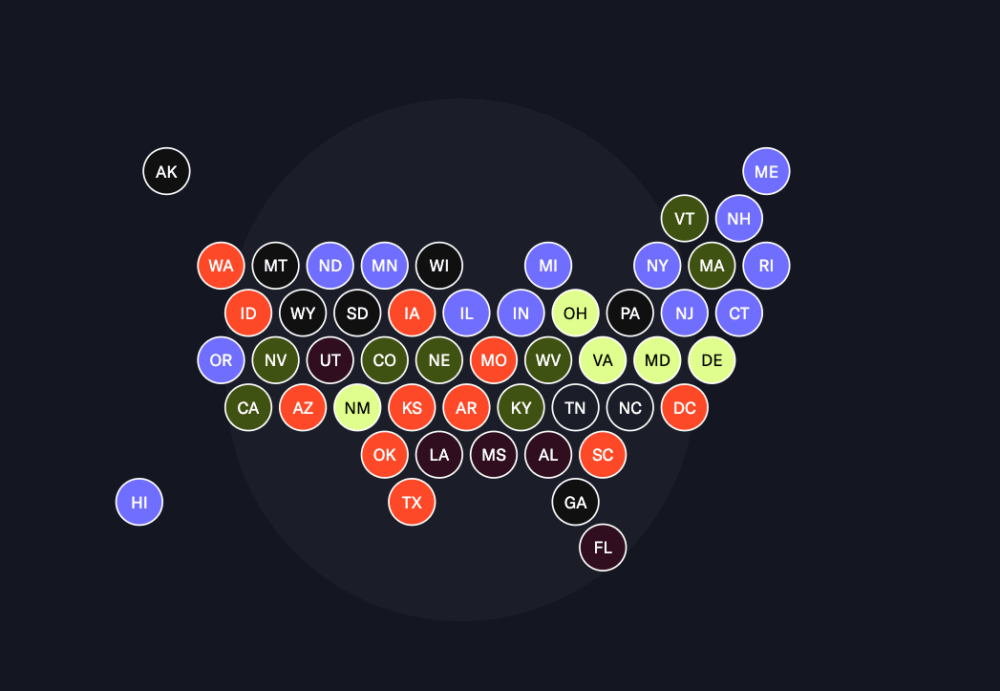
Election Policy Tracker
Explore our Election Policy Tracker for real-time updates and analysis.
Subscribe to The Markup
Sign up here to get these updates delivered straight to your inbox.