Election Boards: The New Battleground for Partisan Interference
Local and state election boards play an essential — but often overlooked — role in our democracy. While they cannot pass laws, they can make rules about elections, investigate voter challenges, and ensure local election officials are doing their jobs. Election boards can also make recommendations to the legislature on election-related laws.
Since 2020, however, a dangerous trend has emerged: a partisan takeover of state and county election boards. Two key developments are driving this trend:
- State and local election officials have come under attack and constant scrutiny by President Trump and his allies as they seek to manipulate time-tested procedures for partisan gain.
- Election deniers and partisan activists have successfully infiltrated local election boards and offices.
The influence of election deniers — both within and outside of election boards — can no longer be ignored. And these partisan attacks are likely to escalate as we tick closer to November.
Georgia Tests Out Playbook for Partisan Control
Georgia offers the clearest example of this new playbook in action. Following the 2020 election, the legislature significantly curtailed the secretary of state’s authority over the State Election Board. In 2021, the Georgia legislature passed S.B. 202, which eliminated the secretary of state’s oversight of the board. The secretary was ousted from the board entirely in 2024.
The move was overtly political in a key swing state where Donald Trump and others advanced baseless claims of fraud following the 2020 election. Raffensperger had defended the legitimacy of the 2020 presidential election. But after his removal, the board was free to add partisan activists and disinformation peddlers to its ranks. These empowered election deniers had earned then-candidate Donald Trump’s stamp of approval. He even praised them publicly at an Atlanta campaign rally – a rare occurrence for a supposedly nonpartisan rulemaking body.
Last-Minute Rule Changes
The new board members immediately set about passing a laundry list of controversial rules, from requiring poll workers to hand-count ballots on Election Day to giving board members more leverage to refuse to certify the results. Every single one of these rules exceeded the Board’s authority over elections. The courts also rejected every single one.
Fulton County Raid
The board also voted to open an investigation into the 2020 election in Fulton County. This was a top priority of Donald Trump. As early as 2024, Trump-backed election board members demanded access to Fulton County’s physical ballots and election materials from 2020. These demands were based on unsubstantiated claims of voter fraud, which the secretary of state and the courts had already dismissed. One member of the Fulton County Board of Elections, Janice Johnston, took things even further. She filed a lawsuit in state court, seeking to redefine state certification rules, expand her powers, and gain access to a wide range of election records, including digital images of specific ballots.
January’s FBI raid of Fulton County’s election offices would not have happened without Johnston, who sought out DOJ assistance after her own pressure campaign failed. Johnston was cheering from the sidelines when FBI agents seized nearly 700 boxes of election materials from the 2020 election.
As of April 2026, no evidence of fraud has been found. The ballots have also not been returned, stoking fears of a political takeover of elections this November.
Election Denier Battles for Control in Maricopa County
Maricopa County — home to the Phoenix metro area — is by far Arizona’s largest county, representing 60% of the state’s population. It is also where the Trump-aligned County Recorder Justin Heap and the County Board of Supervisors are engaged in a power struggle that threatens to undermine the county’s preparedness for the 2026 elections.
An Escalating Feud
Heap defeated incumbent Republican Stephen Richer — who defended Maricopa County’s election systems amid attacks rooted in baseless conspiracy theories — in the 2024 Republican primary and won the 2024 general election. He then wasted no time attempting to wrestle greater control over elections from the board. In 2025, Heap sued the board to compel it to return election management responsibilities and funding, including authority over early voting and IT systems. The board argues that the previous recorder legally transferred these election responsibilities to the Board of Supervisors before departing office.
The board relented and passed a resolution in February offering him control in 2026 (which Heap has yet to accept). However, the escalating feud has diminished public trust in the system. The ongoing litigation between the board and Heap is creating widespread uncertainty about this fall’s elections. Meanwhile, new records show Heap supported the Trump administration’s investigation into his own county’s elections. In doing so, Heap blurred the line between nonpartisan election administration and politicized law enforcement. He has also promoted the president’s election agenda — including aggressive voter purges based on federal data sources with questionable reliability.
Partisan Boards Take Aim at Certification
Certification is a critical, but often misunderstood, stage of the election process. Certifiers do not have the authority to challenge the accuracy of the vote count or election administration processes. Rather, election certification is a mandatory, straightforward process that declares election winners. It occurs only after election officials complete rigorous verification, counting, and canvassing procedures.
Before 2020, local election officials rarely refused to certify. Since then, however, election officials in a growing list of states have tried to block certification – without proof or justification. While these attacks ultimately failed, they have succeeded in eroding public trust in the election system. Some examples are below.
Cochise County, Arizona (2022)
In Cochise County, two out of three members of the County Board of Supervisors refused to certify the midterm results, citing unverified concerns about voting machine accreditation. Despite warnings that failing to canvass the results was a crime, the board refused, threatening to block the votes of up to 61,000 voters. A court finally ordered the board to certify the results, and a criminal lawsuit was filed. One board member accepted a plea agreement to a misdemeanor in 2024. Another faces two felony counts in a trial that’s still ongoing.
Washoe County, Nevada (2024)
In Washoe County, local board members voted along party lines to refuse to certify the results of two primary races. The races had already been recounted several times. It took the threat of criminal charges for the board to finally certify the results.
Waynesboro, Virginia (2024)
In Waynesboro, two members of the local election board refused to certify the results. The members filed a lawsuit. The suit alleged issues with machine tabulation and cited the board’s inability to verify the vote count by hand. It was voluntarily dismissed.
North Carolina Board Bends to Trump’s Agenda
In the 2024 lame-duck session, the North Carolina legislature enacted H.B. 382, which significantly altered the composition of state and county election boards. The legislature also took advantage of its ability to override the governor’s veto to shift authority over board appointments from the governor to the state auditor. This shift was intended to ensure Republican majorities on those bodies.
April 2025
Beginning in April 2025, the new state board quickly settled litigation brought by the Department of Justice. Now 241,000 voters will need to update their registrations or risk being denied a ballot in the next election. This litigation and settlement echoed claims brought by state Supreme Court candidate Jefferson Griffin in his failed attempt to overturn the 2024 election he lost. In March 2026, the board took a different approach. The board followed the law by declining to take up Republican Senate Leader Phil Berger’s unusual request for a hand-eye recount. This was part of an effort to remain in power after losing his primary in March.
April 2026
However, the board once again bent to the Trump administration’s will. In April 2026, the board voted to send the state’s entire voter list to the Department of Homeland Security for comparison with the Systematic Alien Verification for Entitlements (SAVE) database. A majority of states have resisted federal attempts to access state voter rolls and have challenged these requests in court.
To be clear, all five courts that have decided the issue have found that federal authorities do not have a legal right to the voter lists and that doing so puts voters’ privacy at risk.
Meanwhile, the states that have cooperated with federal authorities and used the SAVE database have mistakenly flagged numerous eligible voters as noncitizens. If North Carolina experiences similar mistakes heading into this year’s midterms, it would be a recipe for chaos and diminished trust in elections.
Heading into November, we must continue to monitor whether North Carolina’s county boards take steps to ensure fairness and consistency in this fall’s elections. This includes when they address important tasks under their jurisdiction, such as establishing early voting times and locations and verifying absentee ballots.
The Path Forward
A new battlefront in the fight to secure our elections is here — but we know how to fight back. For example:
- State and county election boards can provide clarifying guidance to local election officials consistent with state laws, rather than seeking a policy-making role that belongs to state legislators.
- State legislators can advance laws that further cement certification as mandatory to prevent confusion.
- Journalists and the public can push back against disinformation narratives that threaten to chip away at voters’ trust in the democratic process.
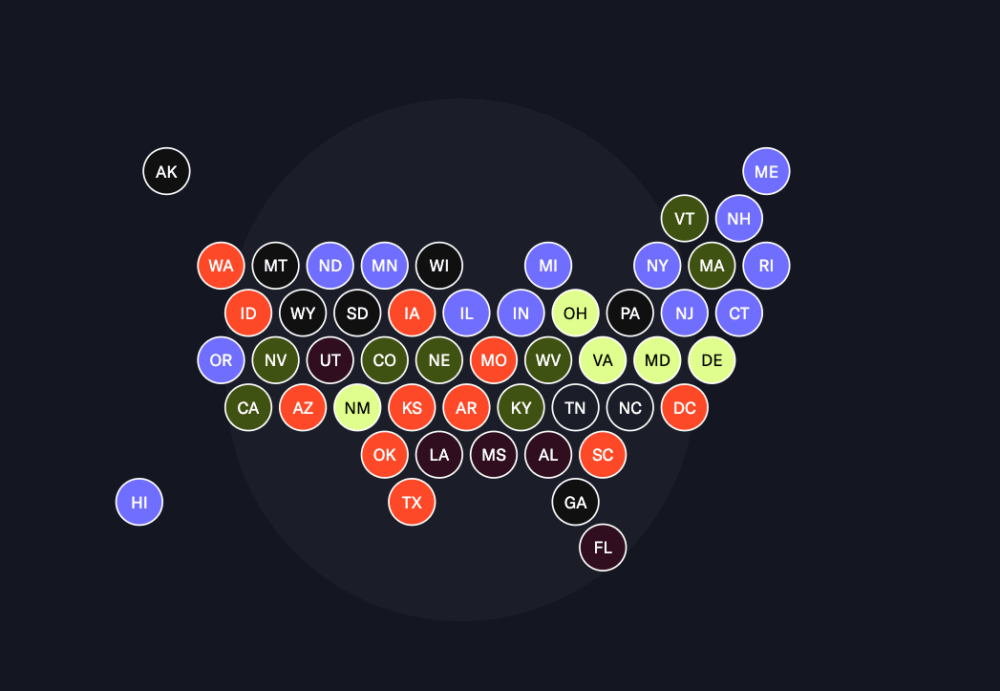
Election Policy Tracker
Explore our Election Policy Tracker for real-time updates and analysis and learn more about our work to ensure free and fair elections.
Subscribe to The Markup
The Markup is Voting Rights Lab’s weekly legislative update. Sign up here to get these updates delivered straight to your inbox.