Trump’s Election Playbook Builds Momentum in the States
Last updated: June 26, 2026
While President Donald Trump’s federal election agenda has stalled in Congress and the courts, state legislators aren’t waiting around. Instead, state lawmakers are quietly advancing hundreds of bills targeting the foundations of American elections: who can register to vote, how ballots are cast, and when polls are open.
We’ve identified three categories of policy proposals central to Trump’s election agenda. While none of these policies have been enacted yet, they are building momentum in statehouses across the country:
- Restrictions on who can vote through excessive proof-of-citizenship mandates, changes to voter registration, and voter-roll purges.
- Restrictions on how American citizens can vote by mail.
- Restrictions on how American citizens can vote in person.
Proof of Citizenship Mandates, Changes to Voter Registration, and Voter List Purges
Following Trump’s executive order on elections and several bills in Congress — including the SAVE America Act and the Make Elections Great Again Act — state lawmakers are pursuing proof of citizenship mandates of their own. So far this session, Florida, Mississippi, South Dakota, and Utah have signed into law proof-of-citizenship legislation.
Meanwhile, we’re tracking the quiet escalation of aggressive voter list maintenance practices that risk American citizens being purged from the voter rolls.
| Topic | States | Passed at Least One Chamber | Signed Into Law |
|---|---|---|---|
| Proof of citizenship to register to vote | 17 states | Five states | Four states (Florida, Mississippi, South Dakota, Utah) |
| Changing list-maintenance processes searching for non-citizens | 26 states | Nine states | Eight states |
Restrictions on Mail Voting
Despite nearly one in three Americans voting by mail in 2024, Trump has waged a disinformation campaign to end the practice since losing the 2020 election. Currently, more than two-thirds of the country allows all citizens to vote by mail for any reason, and eight states have instituted “universal vote by mail,” meaning everyone automatically receives a ballot by mail. Contrary to the president’s claims, there is no evidence that mail voting specifically favors one political party.
| Topic | States | Passed at Least One Chamber | Signed Into Law |
|---|---|---|---|
| New ID or witness/notary requirements | 18 states | Four states (Arizona ballot initiative, Ohio, Rhode Island, Utah) | One state (Rhode Island) |
| Eliminating postmark grace periods | Seven states | Two states (West Virginia & Mississippi) | One state (Mississippi) |
| Eliminating or prohibiting universal vote-by-mail | Four states | One state (Kansas) | None |
| Eliminating or prohibiting permanent mail voter lists | Five states | None | None |
| Ending no-excuse mail | Seven states | None | None |
| Narrowing qualifying excuses | Five states | Two states (Mississippi & West Virginia) | One state (West Virginia) |
Restrictions on In-Person Voting
Stealing a page from the president’s playbook, many states are pursuing policies that would affect the in-person voting experience. These policies include limiting voter ID options and cutting early in-person voting opportunities. In-person early voting enjoys broad bipartisan support; only three states do not offer voters the opportunity to vote early.
| Topic | States | Passed at Least One Chamber | Signed Into Law |
|---|---|---|---|
| Strict photo ID requirement | 13 states | Two states (Oklahoma & Ohio) | One state (Ohio) |
| Limiting forms of ID | 17 states | 10 states | Seven states |
| Limiting or eliminating exceptions | 11 states | Eight states | Six states |
| Eliminating in-person early voting | Three states (Indiana, Pennsylvania, South Carolina) | None | None |
| Restricting early voting | 15 states | Five states | One state (Arizona ballot initiative) |
| Decreasing early voting days | Eight states | One state (Indiana) | None |
What’s Next
The state-level push documented here is not happening in isolation. It reflects a coordinated effort from the president and his allies to reshape election administration ahead of the 2026 midterms without congressional action. As election season heats up, states will face growing pressure to act quickly.
Follow the latest developments through our Election Policy Tracker:
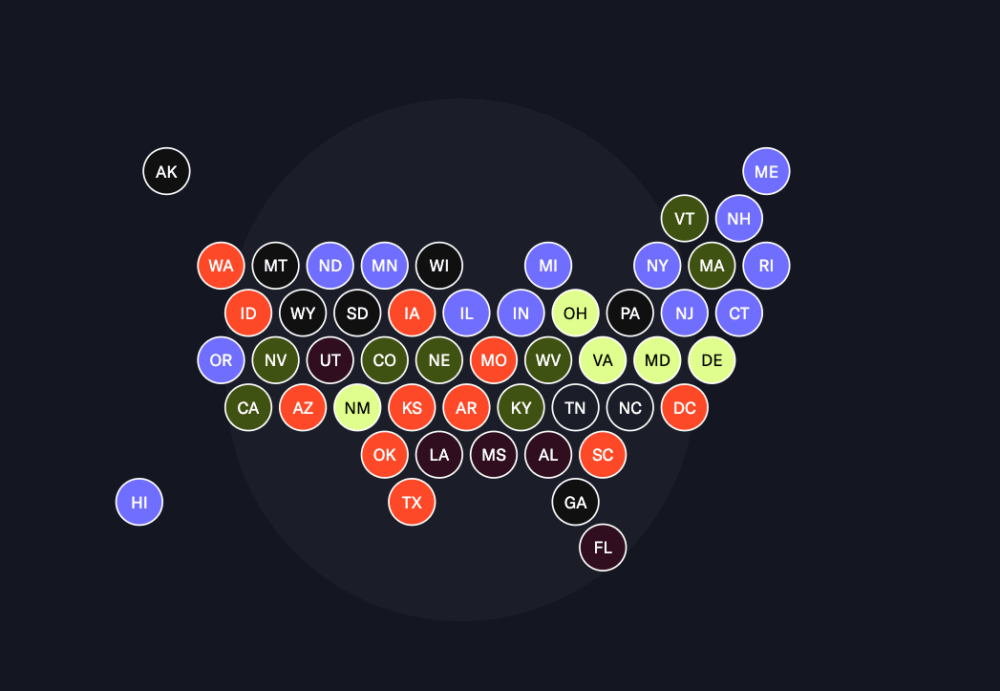
Election Policy Tracker
We are committed to providing unique, state-focused insights from a national perspective. Explore our Election Policy Tracker for real-time updates and analysis and learn more about our work to ensure free and fair elections.
Subscribe to The Markup
The Markup is Voting Rights Lab’s regular analysis of the latest election policy issues and trends. Sign up here to get these updates delivered straight to your inbox.