The Markup: Texas GOP continues to scale back plans to hand-count ballots
Voting Rights Lab is tracking 1,366 bills prefiled or introduced this session across 42 states and D.C. Our analysis finds that 649 bills would improve voter access or election administration, while 295 bills would restrict them. This week’s Markup features policy updates in Alabama, Arizona, Florida, Kentucky, Rhode Island, South Dakota, Texas, and Virginia.
Jump to section:
Improving Voter Access or Election Administration
Virginia House advances bills improving voter list maintenance.
The Virginia House passed several bills to improve voter list maintenance processes and protect voters against wrongful removal. H.B. 215 would require Virginia to rejoin the Electronic Registration Information Center (ERIC), which the state left in 2023. A similar bill passed the Senate in January. H.B. 111 would bar registrars from cancelling voter registrations based on information from non-governmental sources. Additionally, it would also protect against the erroneous cancellation of registrations for overseas and military voters. H.B. 972 would bar officials from using the Department of Homeland Security’s SAVE database to remove voters from state rolls without a supplemental verification. These bills now go to the Senate for consideration.
Kentucky Senate advances constitutional amendment to restore voting rights to some citizens with felony convictions.
The Senate passed a constitutional amendment that would automatically restore voting rights to citizens with past convictions for most felonies upon completion of their sentence. This would include disenfranchisement during any period of probation or parole. Gov. Andy Beshear established Kentucky’s current rights restoration system in a 2019 executive order. Through this process, only Kentucky citizens disenfranchised for state convictions automatically have their voting rights restored.
Rhode Island House passes bill restoring electronic ballots for military and disabled voters.
The Rhode Island House of Representatives passed H.B. 7007. The bill would restore an expired program that permitted eligible disabled and UOCAVA voters to receive electronically transmitted ballots and return ballots through a secure electronic portal. A similar temporary provision expired on December 31, 2025. The bill now heads to the Senate for consideration.
Alabama Senate passes bill to facilitate rights restoration.
The Alabama Senate passed S.B. 24, a bill to improve transparency in the rights restoration process for citizens with past felony convictions. Officials would be required to post additional information about how voting rights can be restored to disenfranchised individuals. They would also be required to share the names and location of individuals whose rights have been restored. The bill now goes to the House for consideration.
Texas GOP continues to scale back plans to hand-count ballots.
The Republican Party of Gillespie County in Texas became the latest county party to scale back plans to hand-count primary ballots after failing to find sufficient volunteers. Dallas County abandoned a similar plan late last year. Research shows that hand-counting ballots is both slower and less accurate than tabulation machines.
Restricting Voter Access or Election Administration
Florida proof of citizenship bills clear committees.
The Florida legislature advanced bills that would require all Floridians to verify their U.S. citizenship to register to vote. The bills, which would require voters to provide documents such as a passport or birth certificate, advanced through committees in both chambers. H.B. 991 is expected to be heard on the House floor on February 25. S.B. 1334 has not yet been scheduled for a vote on the Senate floor.
South Dakota Senate passes bill requiring proof of citizenship to register to vote.
The Senate passed S.B. 175, a bill requiring individuals to provide documentary proof of U.S. citizenship, such as a passport or birth certificate, to register to vote in state elections. Voters who did not provide proof of citizenship would be designated as federal-only voters — meaning they could only vote in federal races. Federal law requires that a driver’s license or Social Security number be sufficient to register to vote. The bill now moves to the House for consideration.
Arizona Senate advances constitutional amendment to restrict early voting.
Arizona lawmakers adopted a proposal to move the mail ballot (“early ballot”) return deadline earlier, from Election Day to the Friday before Election Day. The proposal also adds burdensome address-confirmation requirements for voters on the permanent mail voter list, effectively eliminating the permanent list. If the House, which has already passed a similar measure, approves this proposal, then the amendment will go before Arizona voters in November. The constitutional amendment process allows the legislature to bypass the ability of Gov. Katie Hobbs to veto legislation.
Separately, an eleventh-hour proposal to require local election officials to enter into written agreements with federal immigration law enforcement failed in the Senate Judiciary and Elections Committee. The controversial proposal raised concerns about voter intimidation and federal overreach. The proposal was ultimately not heard in committee, effectively blocking its path in light of a key legislative deadline. Federal law prohibits stationing troops or armed federal law enforcement at voting locations.
Subscribe to The Markup
The Markup is Voting Rights Lab’s regular analysis of the latest election policy issues and trends. Sign up here to get these updates delivered straight to your inbox.
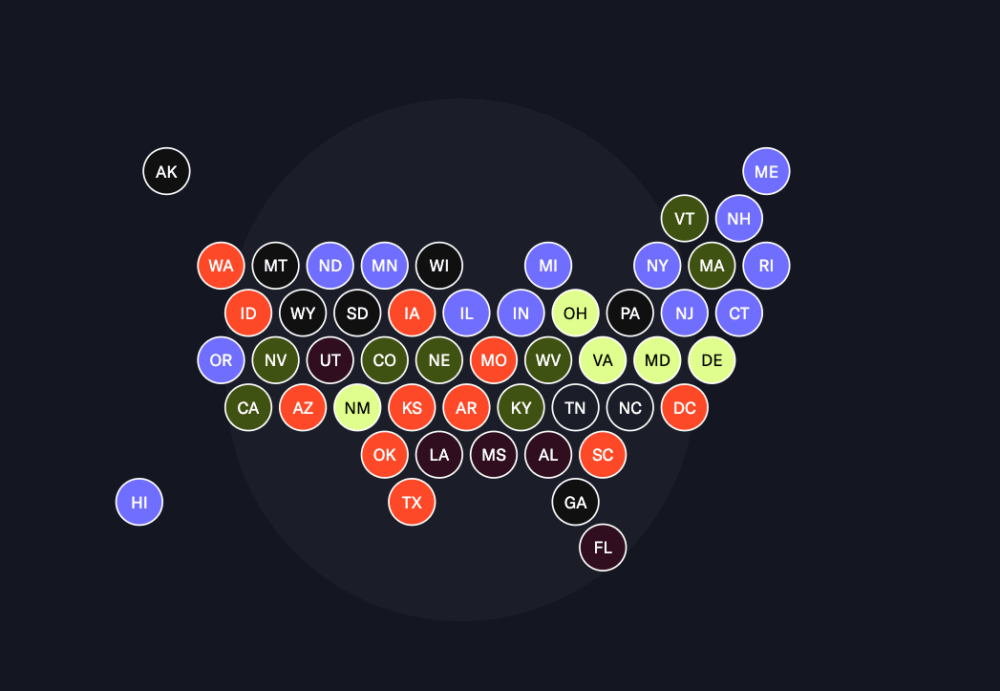
Election Policy Tracker
We are committed to providing unique, state-focused insights from a national perspective. Explore our Election Policy Tracker for real-time updates and analysis and learn more about our work to ensure free and fair elections.