Verified Results Are Worth the Wait: What Happens After Polls Close
The polls close. News anchors begin projecting the winners. Yet in many counties and states, the numbers will keep changing for days after Election Day. That’s exactly how the process is designed to work.
The Constitution is clear: states run elections. States get to decide what works best for their voters and communities, rather than following a one-size-fits-all rule. Every state counts, checks, and audits ballots, then compiles and certifies results on a schedule set by state law — but that schedule varies, state by state. And in races with razor-thin margins, final results can take even longer.
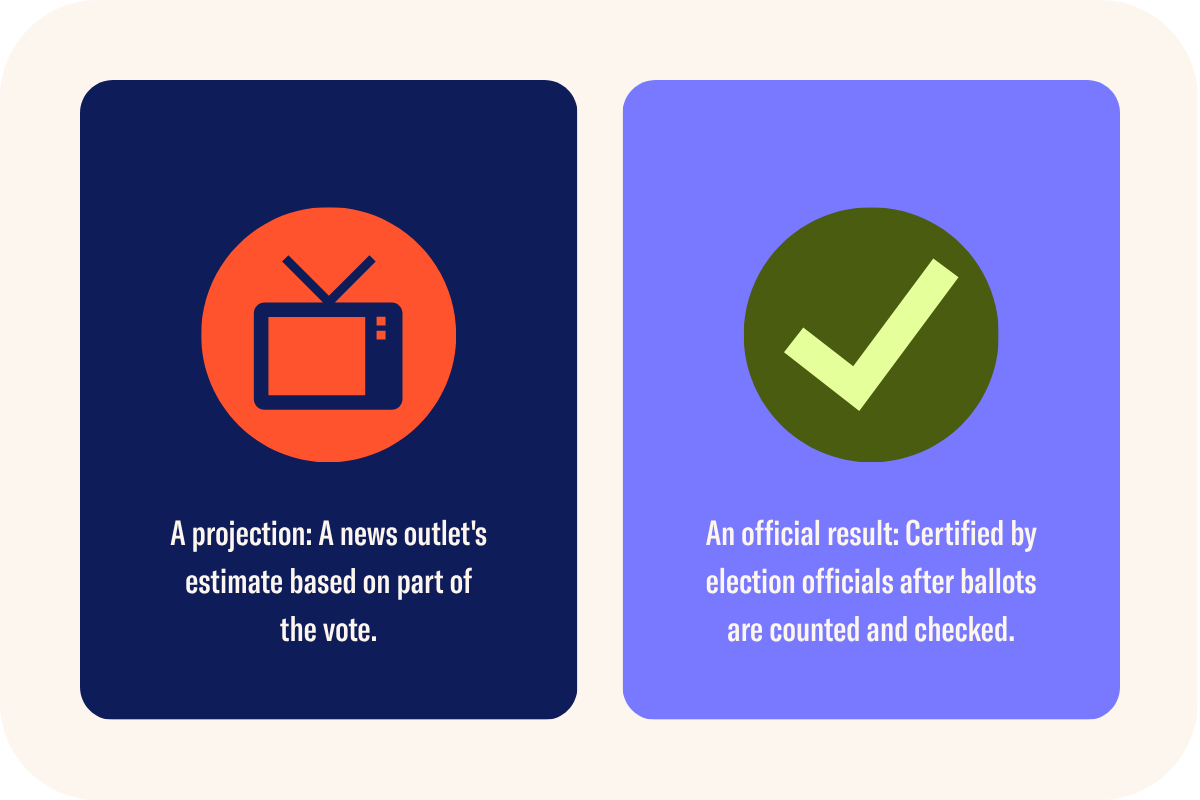
That’s why results reported on election night are never official. These are partial, unofficial counts based on the votes counted so far.
Taking time to verify results is a sign the system is working as it should.
What does it mean when the media “calls” a race?
When a news outlet “calls” a race, it projects a winner based on the votes counted so far. That projection is not an official result. When races are tight, it can take longer because news outlets wait for more votes to be counted before making an unofficial call. That’s why a news outlet may call the winner of a statewide race on election night, while a close House race on the same ballot in the same state may stay undecided for weeks.
Close contests take longer to call, and bad actors can exploit the wait: the longer the gap between election night and official results, the more room for disinformation and conspiracy theories to sow distrust in the results.
After the polls close, how are ballots counted?
At many polling places, voters insert their ballots directly into scanners that tabulate them on the spot. Election officials often tabulate mail ballots at central counting locations. Wherever the count happens, election officials follow a built-in system of checks and balances.
- Bipartisan teams handle the ballots. Most states require workers from different political parties to staff counting sites, and party representatives can generally observe. In Arizona, two election workers from different parties transport ballots to the central counting location, where bipartisan workers appointed by election officials handle them.
- The numbers have to add up. Before results leave the polling place, officials reconcile the number of ballots counted against the number of voters who checked in. In New Hampshire, for example, election inspectors must complete an “inspector’s statement” after the tally, noting any discrepancy between the number of ballots and the number of voters.
- The machines get tested. Many states test their equipment before and after an election to make sure it works properly. Texas law requires officials to test counting equipment three times: no later than 48 days before Election Day, immediately before counting begins, and immediately after counting ends.
Before results leave the polling place, officials check that the number of ballots counted matches the number of voters who checked in.
Why do some states take longer to count votes than others?
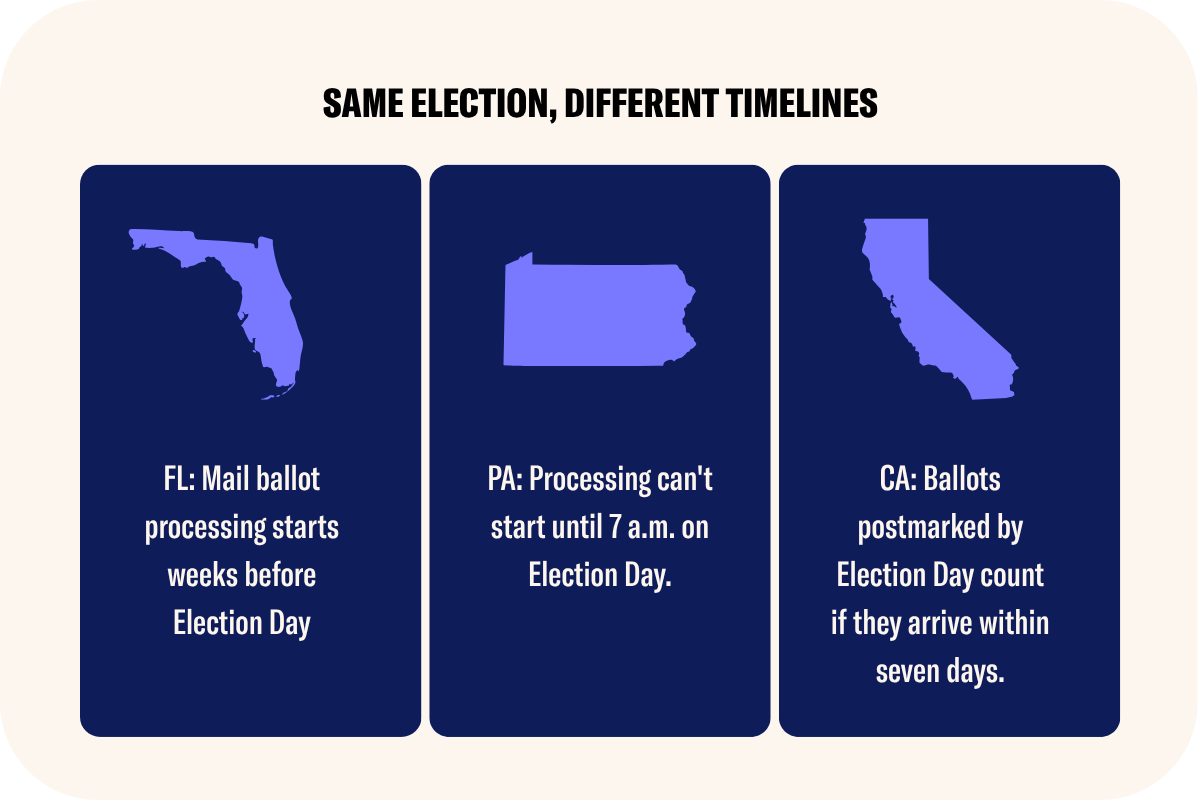
How quickly a state counts depends largely on its own laws, which determine (1) when officials can start processing mail ballots and (2) whether ballots that arrive after Election Day can still be counted.
Although the majority of states allow officials to verify mail ballots as soon as they receive them, some do not permit verification until closer to Election Day, on Election Day itself, or even after polls close.
- Florida is known for reporting results quickly, in part because state law allows election officials to begin processing and tabulating mail ballots weeks before Election Day.
- Pennsylvania and Wisconsin are among the states whose laws prohibit early tabulation, so officials need more time to count ballots. In Pennsylvania, county boards cannot begin “pre-canvassing” mail ballots — which includes opening, verifying, and counting them — until 7 a.m. on Election Day.
- California accepts ballots postmarked by Election Day if they arrive within seven days of Election Day. When many voters return their ballots close to Election Day, counting can take weeks.
The Supreme Court addressed late-arriving ballots this year. In Watson v. RNC, a challenge to Mississippi’s grace period, the Court confirmed that states may count ballots that arrive after Election Day, as long as they are postmarked by Election Day.
How do states verify the final election results?
During the canvass, officials compile and double-check the results before they become official. Local officials compile countywide results, determine winners in local races, and send the results to state officials. The process then repeats at the state level for statewide races and races that span more than one county.
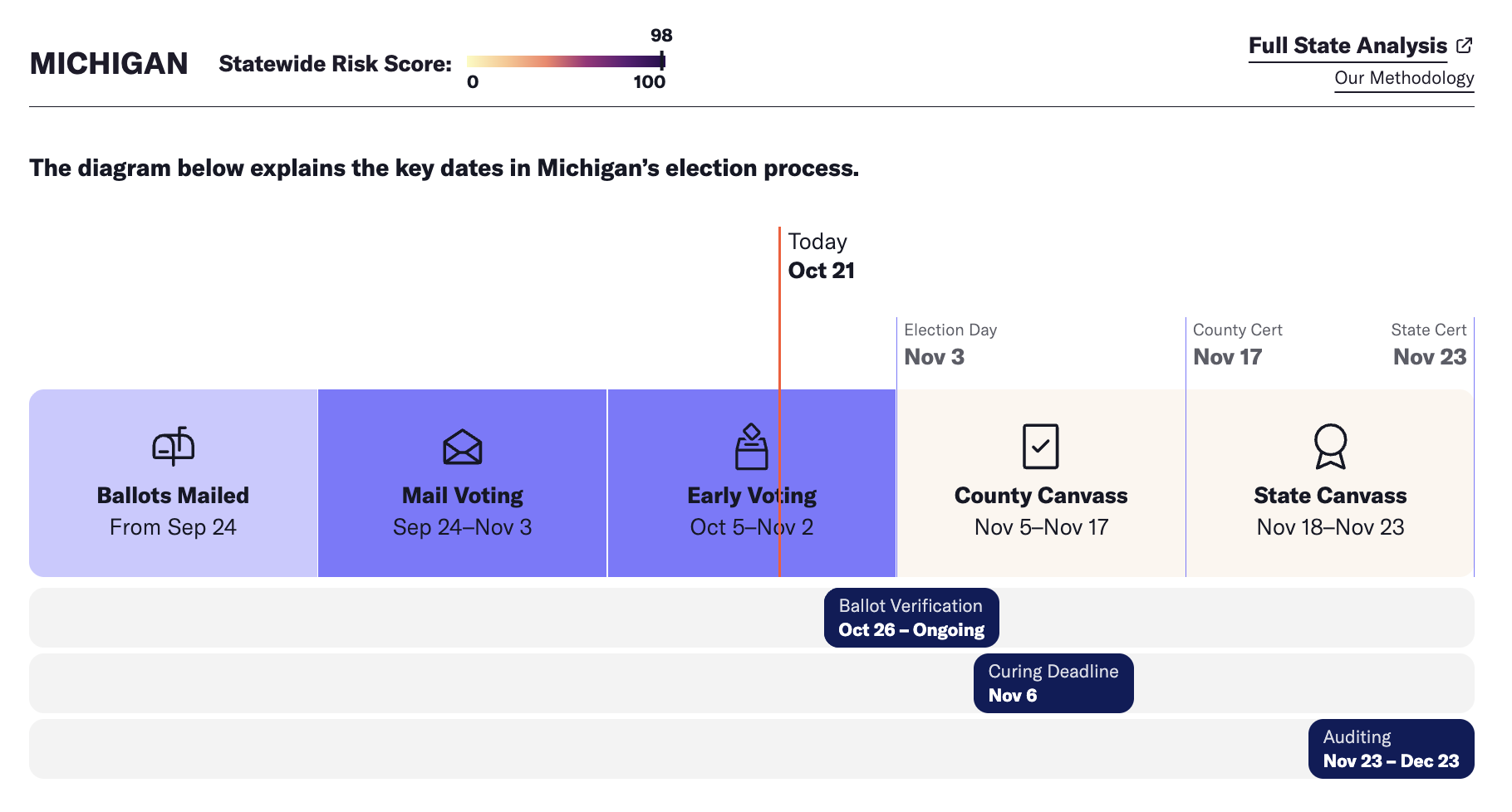
Canvassing generally takes place within a week or two of Election Day — long enough to verify provisional ballots and let voters fix problems with their mail ballots. In Michigan, for example, a four-member board of county canvassers, two from each major party, meets publicly and must finish within 14 days of the election. The state board must finish within 20 days.
Many states also audit results before certification, so officials can catch and fix errors before results become official. In Arizona, bipartisan teams of county election workers must begin a hand-count audit within 24 hours of the polls closing and finish it before the canvass.
What is election certification, and can officials refuse to certify?
Certification is a critical, but often misunderstood, stage of the election process. Election certification is the mandatory, straightforward process in which election officials declare the winners. It occurs only after election officials complete counting, verification, and canvassing procedures.
Like the rest of the process, certification varies by state. Depending on the state, certification authority may rest with a single local election official, a local elections board, or a county’s general governing body, such as a board of supervisors. County officials sign off on the canvass, submit results to state officials, and issue election certificates to winners of local races. After the state canvass, state officials certify statewide and multicounty races and issue those certificates.
Before 2020, local election officials rarely refused to certify. Since then, however, election officials in a growing list of states have tried to block certification — without evidence of problems with the results. Although these efforts failed, they still eroded public trust in the election system.
What happened when counties delayed certification in 2022?
During the 2022 midterm elections, officials in some counties tried to delay certification. Courts shut those efforts down, but the delays still caused real harm by confusing voters and election officials alike.
- Cochise County, Arizona: The board of supervisors delayed certification past the state’s Nov. 28 deadline. After plaintiffs sued, the court quickly ordered the board to canvass the ballots, and it certified the results. Two supervisors later faced criminal charges, and one pleaded guilty.
- Luzerne County, Pennsylvania: On the Nov. 28 deadline, the county board deadlocked 2-2 with one abstention, so certification failed. After a lawsuit was filed, the board certified the results by a 3-2 vote on Nov. 30, and the lawsuit was dropped.
How are states protecting certification?
In response, some states have made certification explicitly mandatory by law.
- Virginia enacted H.B. 78 this year, clarifying that county electoral boards’ authority to certify results is ministerial and nondiscretionary — a required duty, not a judgment call. The law also lets the State Board of Elections step in if a local board refuses to do its job and sets a civil penalty for boards that refuse to certify as required.
- California enacted S.B. 851 last year, clarifying that certification duties are ministerial and nondiscretionary. If an elections official fails to prepare a certified statement of results, the secretary of state must refer the violation to the district attorney or attorney general and may assist the county elections official.
What about recounts and election challenges?
In most states, candidates in close races can request recounts and challenge results in court, where they must prove errors in how the election was run.
- Georgia enacted a law this year requiring automatic hand recounts for the top two statewide races when the margin is 0.5% or less.
- Some states, like Minnesota, allow losing candidates to request a recount at their own expense when the margin is too wide for a publicly funded one.
Recently, however, losing candidates have made unfounded claims of irregularities. These bad-faith efforts have delayed certification and eroded public confidence in elections.
- Minnesota, 2026: After losing the Republican primary for governor by 45,000 votes, Mike Lindell sought a full recount but did not file a proper request by the deadline. A court rejected it.
- North Carolina, 2024: In a race for the North Carolina Supreme Court, Jefferson Griffin filed legal challenges after two recounts confirmed he had lost by 734 votes. He sought to invalidate more than 60,000 ballots and dragged the legal battle out for six months after the election, until a federal judge ordered the election certified.
How can I tell a normal wait from a real disruption?
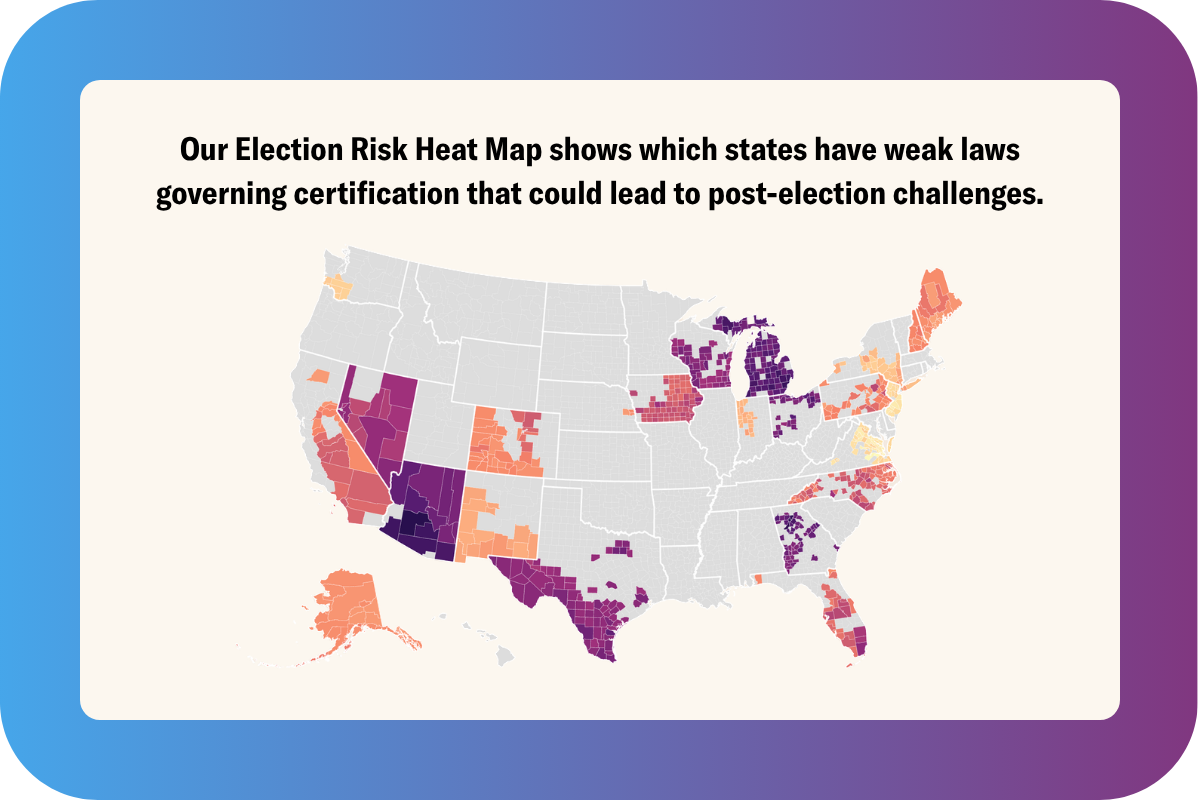
Knowing the process is designed to take time is one thing. Telling a normal wait apart from a real disruption is another. Voting Rights Lab has launched two new Election Risk Heat Map features that can help:
- The Emerging Threats News Feed follows new developments in high-risk states and counties as they break — including new litigation, federal investigations, policy changes, disruptions to the election process, and official actions that may change the landscape for voters. It brings those updates together in one place, so no one has to monitor dozens of sources on their own.
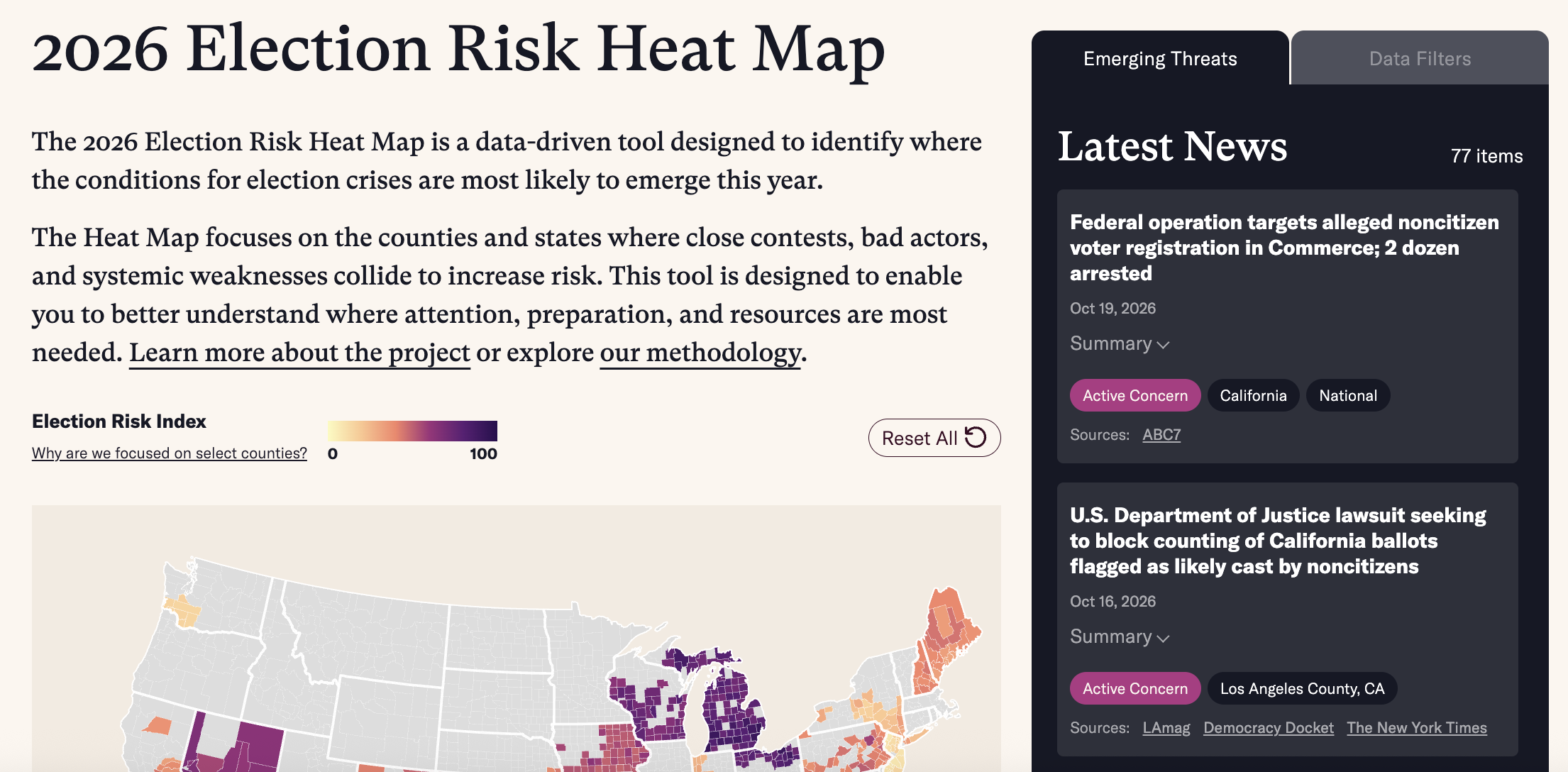
- The Election Timelines & Key Deadlines Tracker tracks key election milestones from now until certification, including mail ballot timelines, early voting, cure deadlines, auditing, and county and state canvassing. That makes it possible to act before a deadline arrives, not after.